
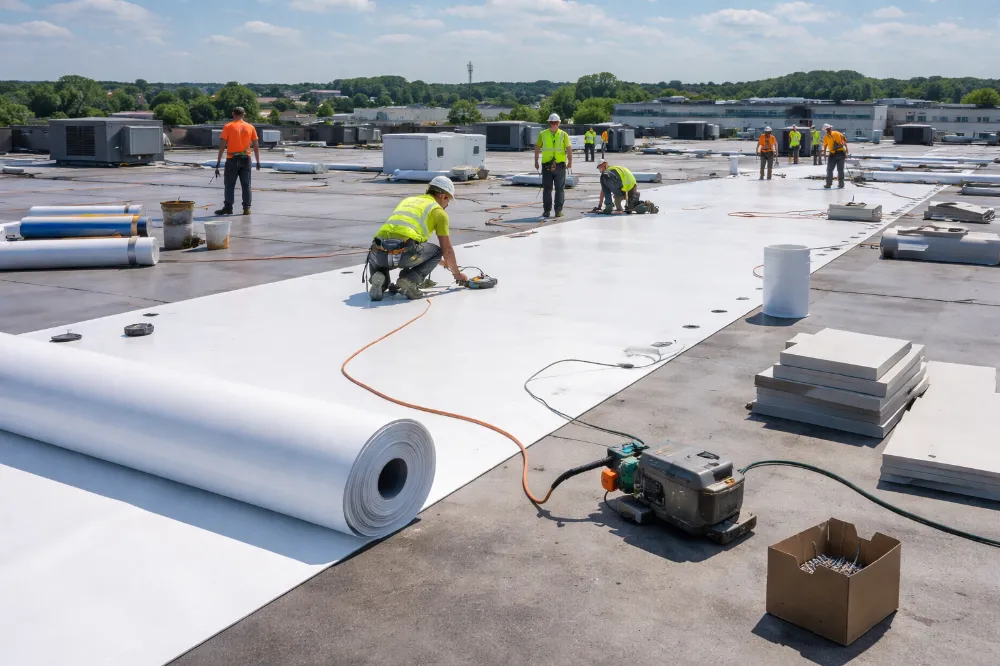
When planning a commercial or low-slope roofing project, understanding what drives cost is just as important as choosing the right material. Single-ply roofing systems are widely used because they offer durability, energy efficiency, and streamlined installation. However, their pricing is not fixed or universal. The final cost depends on a combination of material selection, system design, labor conditions, building characteristics, and long-term performance expectations.
This article explores the major cost factors affecting single-ply roofing systems so property owners, facility managers, and decision-makers can budget accurately and make informed choices.
Understanding Single-Ply Roofing Systems
Single-ply roofing systems are flexible membrane roofs commonly installed on commercial, industrial, and institutional buildings. These membranes are manufactured in large sheets and installed using mechanical fasteners, adhesives, or ballast.
The most commonly used single-ply membranes include TPO, EPDM, and PVC. While they fall under the same category, each material performs differently and carries distinct cost implications. These differences influence not only initial pricing but also long-term operating and maintenance expenses.
Material Selection and Membrane Thickness
Material choice is one of the most influential factors in overall roof cost. EPDM typically has a lower upfront material price compared to TPO and PVC. Its simpler rubber composition makes it less expensive to manufacture, but it may not deliver the same energy efficiency benefits in warmer climates.
TPO and PVC membranes usually cost more initially because they are engineered for higher reflectivity and improved performance in heat-intensive environments. PVC often sits at the higher end of the price range due to its chemical resistance and fire-retardant properties.
Membrane thickness also plays a role. Thicker membranes cost more per square foot but generally offer improved durability, puncture resistance, and service life. Choosing between thinner and thicker options requires balancing upfront budget constraints with long-term performance goals.
Roofing System Components Beyond the Membrane
A single-ply roofing system includes more than just the membrane itself. Several supporting components contribute to total cost.
Insulation is a major factor. Higher R-value insulation improves energy efficiency and interior comfort but increases material and labor costs. The type of insulation used also matters, as different products vary in performance, price, and compatibility.
Fasteners, adhesives, and attachment methods affect both material and labor expenses. Fully adhered systems typically cost more than mechanically attached systems because of increased labor and adhesive use, though they can offer improved wind resistance and aesthetics.
Vapor barriers, flashing materials, edge metal, termination bars, and sealants are essential for system performance and code compliance. Roofs with numerous penetrations, parapet walls, or complex edges require additional materials and skilled labor, increasing overall cost.
Roof Size, Layout, and Complexity
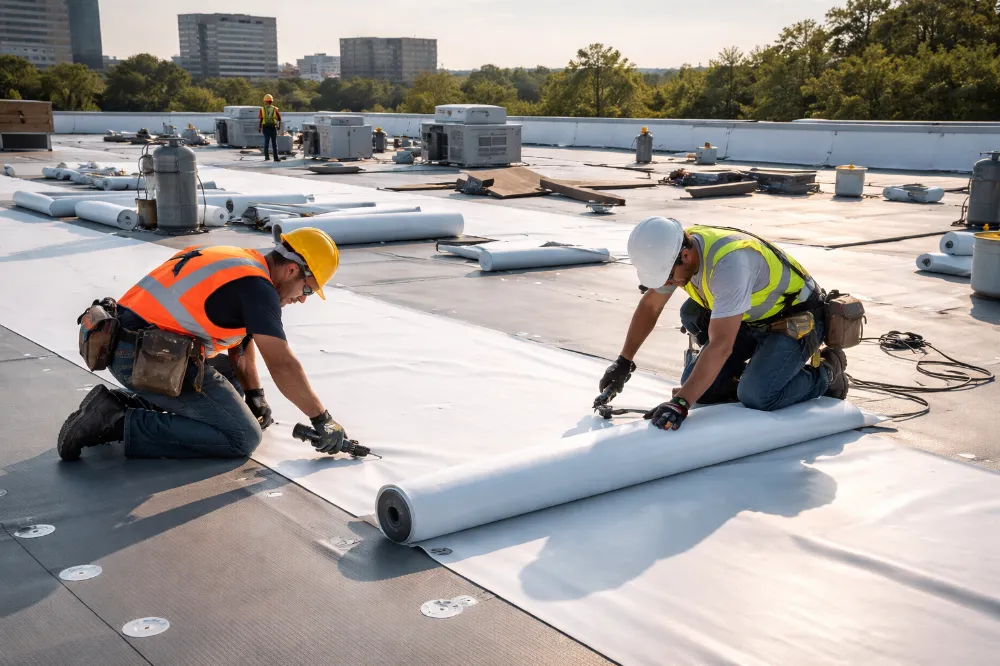
Roof size directly affects total project cost, as larger surfaces require more materials and labor. However, complexity often matters just as much as square footage.
Simple, open roof layouts with minimal penetrations are generally more cost-effective. Roofs with multiple elevations, transitions, tight corners, or unusual architectural features require more cutting, detailing, and installation time.
Even slight slopes can increase labor demands compared to completely flat surfaces. Complex layouts also increase the likelihood of additional flashing and detail work, which raises both labor and material costs.
Existing Roof Condition and Preparation Requirements
The condition of the existing roof structure significantly influences cost, especially in replacement projects.
Tear-off and disposal of old roofing materials can add substantial expense, particularly if multiple layers must be removed or if disposal fees are high. Environmental regulations and landfill costs vary by region and can impact pricing.
Once the existing roof is removed, any damage to the roof deck must be addressed. Water-damaged decking, structural deterioration, or uneven surfaces require repair or replacement before a new system can be installed. These repairs are often discovered after tear-off, making them difficult to predict in advance.
Even when a full tear-off is not required, proper surface preparation is essential. Cleaning, leveling, and priming the substrate add time and cost but are critical for long-term performance.
Labor Costs and Installer Expertise
Labor represents a large portion of total roofing cost and varies widely by location, market demand, and installer experience.
Regions with higher construction demand or labor shortages typically experience higher labor rates. Urban areas often command higher pricing due to increased overhead and competition for skilled crews.
The installation method also affects labor cost. Fully adhered systems are more labor-intensive than mechanically attached systems, while specialized installations may require additional training or certifications.
Experienced contractors with strong track records and manufacturer approvals may charge more, but they often deliver higher-quality workmanship, better warranty coverage, and fewer long-term issues.
Geographic Location and Environmental Conditions
Building location affects roofing cost in multiple ways. Climate conditions influence material selection, attachment requirements, and insulation needs.
In regions prone to high winds, heavy rainfall, extreme heat, or severe storms, roofing systems may require enhanced fastening patterns, thicker membranes, or specialized accessories to meet performance standards.
Transportation costs also vary by location. Delivering heavy materials to remote areas, islands, or dense urban centers can increase expenses.
Local building codes and permitting requirements may mandate additional inspections, engineering approvals, or system upgrades, all of which add to total project cost.
Energy Efficiency and Performance Expectations
Energy efficiency plays a growing role in roofing decisions. Reflective membranes can reduce cooling loads and improve indoor comfort, particularly in warm climates.
Some jurisdictions require reflective or energy-efficient roofing systems, which may limit material choices or increase upfront cost. However, these systems often reduce long-term energy expenses and may qualify for incentives or rebates.
Warranty Coverage and Risk Management
Warranty options directly influence pricing. Standard material warranties typically range from ten to twenty years, while extended warranties may last longer and include additional protections.
Workmanship warranties offered by contractors vary widely. Higher-quality contractors may include longer coverage, reflecting confidence in installation quality. Enhanced warranties that cover wind damage, ponding water, or system components increase upfront cost but can reduce financial risk over the roof’s lifespan. Evaluating warranty coverage carefully is essential when comparing bids.
Project Timing and Seasonal Demand
Roofing costs can fluctuate based on the time of year. Peak seasons often bring higher labor costs and longer scheduling delays due to increased demand.
Weather conditions also affect installation efficiency. Rain, extreme heat, or cold temperatures can slow progress and increase labor hours. Some contractors may offer more competitive pricing during slower seasons, but weather-related risks must be considered when scheduling work.
Access Challenges and Safety Requirements
Roof accessibility affects labor time and equipment needs. Tall buildings, limited access points, or confined urban sites may require cranes, lifts, or specialized staging equipment.
Strict safety regulations increase labor time and equipment requirements, especially on high-rise or complex projects. While these measures are necessary, they contribute to overall cost.
Market Conditions and Supply Chain Influences

Material pricing is affected by broader economic forces. Changes in raw material costs, particularly petroleum-based products, can influence membrane pricing.
Supply chain disruptions, shipping delays, and manufacturing capacity issues may lead to price increases or extended lead times. Labor shortages can further amplify cost pressures. These factors are often beyond the control of property owners but should be considered when budgeting and scheduling roofing projects.
Scope Expansion and Long-Term Planning
Additional features such as upgraded drainage systems, tapered insulation, roof coatings, or preparation for solar installations can increase initial cost but improve long-term performance.
Planning for future upgrades during the initial installation can prevent expensive modifications later. While this increases upfront investment, it often results in better long-term value.
Final Perspective
The cost of a single-ply roofing system is shaped by many interconnected factors rather than a single price per square foot. Material selection, roof complexity, labor conditions, building location, system performance goals, and long-term risk management all play critical roles.
Understanding these cost drivers allows property owners and decision-makers to evaluate proposals more accurately, avoid surprises, and select roofing systems that balance budget, durability, and performance. A well-designed and properly installed single-ply roof is not simply an expense it is a long-term investment in the protection and efficiency of the building.
FAQs
What is the biggest cost factor in single-ply roofing systems?
Material type and labor typically account for the largest portion of total cost.
Is TPO more expensive than EPDM roofing?
TPO usually has a higher upfront cost than EPDM due to its reflectivity and energy efficiency.
How does roof size affect single-ply roofing cost?
Larger roofs require more materials and labor, increasing total cost, though cost per square foot may decrease.
Does roof complexity impact pricing?
Yes, multiple penetrations, elevations, and transitions increase labor time and material usage.
Are tear-off costs included in single-ply roofing estimates?
Not always—tear-off and disposal are often priced separately depending on roof condition.
How much do labor costs influence total roofing cost?
Labor can represent 40–60% of the total project cost, depending on region and system type.
Do energy-efficient membranes cost more?
Reflective membranes may cost more upfront but can reduce long-term energy expenses.
Does climate affect single-ply roofing system cost?
Yes, extreme weather conditions may require thicker membranes or enhanced fastening systems.
Are extended warranties worth the additional cost?
Extended warranties increase upfront cost but can reduce long-term financial risk.
Can timing the project reduce roofing costs?
Scheduling during off-peak seasons may lower labor costs, depending on weather conditions.