
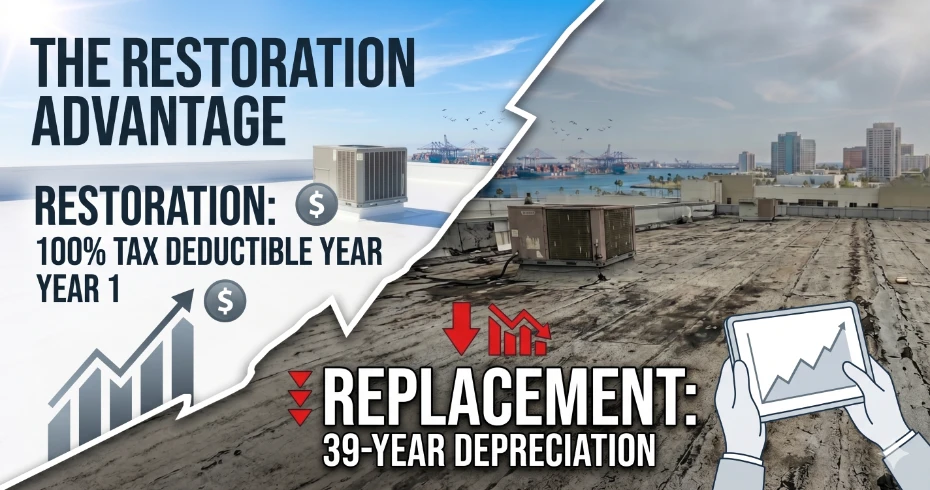
For commercial property owners, roofing decisions have traditionally been driven by two primary factors: upfront cost and expected system lifespan.
However, in today’s economic environment—especially in high-cost regions such as Southern California—another factor is becoming increasingly relevant: tax treatment and financial classification of roofing work.
The way a roofing project is categorized can influence long-term financial outcomes far beyond the initial installation cost, yet it is often not fully considered during planning.
Replacement vs. Restoration: A Financial Classification Issue
From a tax and accounting perspective, roofing work is generally categorized into two broad groups:
- Capital improvements (full roof replacement)
- Repairs or maintenance-related work (restoration or partial system rehabilitation)
Full roof replacements are typically treated as capital improvements and depreciated over an extended period, following standard commercial property depreciation schedules.
Restoration projects, depending on scope and execution, may in some cases be classified differently—often as repair or maintenance activities rather than full capital replacement.
This classification difference can significantly influence how costs are recognized over time.
Why Roof Restoration Is Gaining Commercial Interest
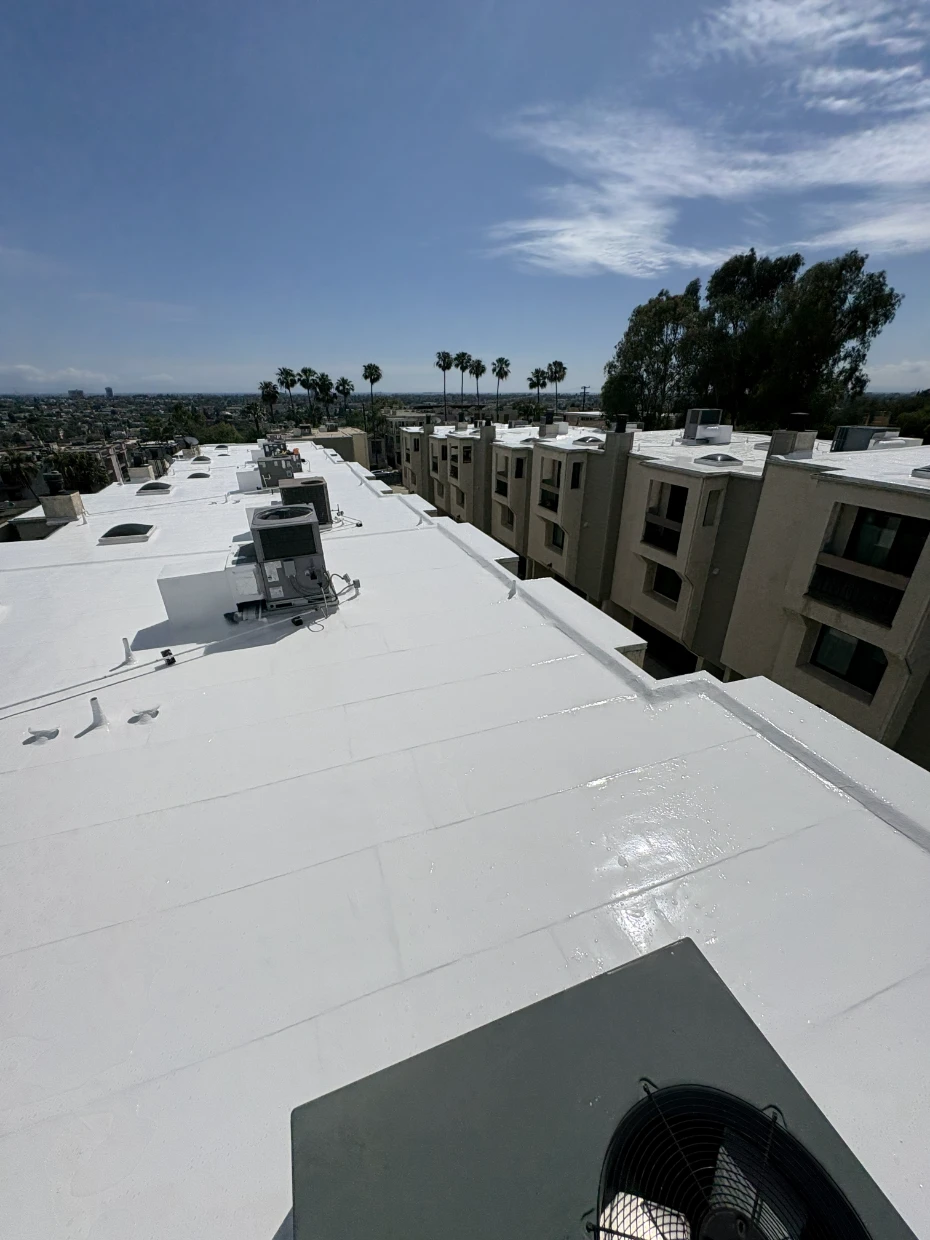
Roof restoration systems, including fluid-applied coatings and membrane reinforcement solutions, are increasingly being evaluated not only for technical performance but also for financial efficiency.
In suitable conditions, restoration may offer several potential advantages:
- Lower upfront capital expenditure compared to full replacement
- Potentially different accounting treatment depending on scope of work
- Extended roof service life without full system removal
- Reduced disruption to building operations during installation
Contractors such as Golem Roofing have observed increased interest from property managers seeking to extend asset life while optimizing capital planning strategies.
Section 179 and Accelerated Expensing Considerations
Certain commercial property improvements may, under specific conditions, be eligible for accelerated depreciation or expensing provisions, including Section 179.
However, eligibility depends on multiple factors:
- property type and usage
- nature and scope of improvements
- classification of work for tax purposes
- current IRS rules and interpretation
When applicable, accelerated expensing may improve short-term cash flow by allowing faster recognition of certain improvement costs.
Because tax treatment is highly situation-specific, coordination with a qualified tax professional is essential.
Energy Efficiency and Incentive Potential
In warmer climates such as Los Angeles and Orange County, roofing decisions are also increasingly influenced by energy performance.
Reflective or “cool roof” restoration systems may contribute to:
- reduced heat absorption
- lower cooling demand
- improved building energy efficiency
In some cases, energy-efficient upgrades may intersect with incentive programs such as Section 179D, depending on certification and compliance requirements.
Evaluating Total Cost of Ownership
When comparing roof replacement and restoration, upfront cost alone does not reflect the full financial picture.
A more complete evaluation typically includes:
- lifecycle cost of the system
- expected maintenance requirements
- tax treatment and depreciation structure
- timing of deductions and cash flow impact
- operational savings, including energy efficiency
In many cases, restoration can offer a balance of reduced initial cost and improved financial flexibility.
A Shift in Commercial Roofing Decision-Making
Industry trends suggest a gradual shift in how roofing projects are evaluated in commercial real estate.
Instead of defaulting to replacement, more property owners and asset managers are increasingly considering:
- whether the existing system is structurally restorable
- financial and tax implications of each option
- long-term return on investment rather than only upfront cost
- lifecycle management of building envelope assets
This reflects a broader movement toward treating roofing as part of integrated asset strategy rather than a standalone maintenance expense.
About the Author & Field Perspective
This article is written from the perspective of field experience in commercial and residential roofing systems in Southern California.
The author is Andy Markavets, co-founder of Golem Roofing, a California-based roofing company specializing in roof restoration and replacement systems for residential and commercial properties.
The company’s field work across Los Angeles, Orange County, and surrounding areas has shown a growing shift in client priorities—from full replacement-first thinking toward evaluating restoration-first strategies where structurally appropriate.
This on-the-ground exposure to different roof systems and building conditions has helped shape a practical understanding of how technical decisions intersect with lifecycle cost, asset protection, and long-term maintenance planning.
Website: https://golemroofing.com
Conclusion
Roof restoration is not appropriate for every structure, and its suitability depends on roof condition, system type, and project goals.
However, when applicable, it may provide both operational and financial advantages that go beyond traditional cost comparison models.
As a result, roofing decisions are increasingly being evaluated through a combined lens of performance, cost efficiency, and tax strategy.
Disclaimer
This article is for informational purposes only and does not constitute tax, legal, or financial advice. Property owners should consult with a qualified CPA or financial advisor before making tax-related decisions.
FAQs
Is roof restoration cheaper than a full roof replacement?
In many cases, yes. Roof restoration typically requires less material and labor, resulting in lower upfront costs than a complete replacement.
Can roof restoration qualify for tax advantages?
Potentially. Depending on the scope of work and current tax regulations, some restoration projects may receive different tax treatment than capital improvements.
What is the difference between roof restoration and roof replacement?
Roof restoration extends the life of an existing roof through repairs, coatings, or reinforcement, while roof replacement involves removing and installing a completely new roofing system.
How long can a restored commercial roof last?
The lifespan varies by roof condition and restoration method, but many systems can gain 10 to 20 additional years of service life.
Does roof restoration improve energy efficiency?
Many restoration systems include reflective coatings that can reduce heat absorption and lower cooling costs in warm climates.
Is every commercial roof a candidate for restoration?
No. The existing roof must be structurally sound and meet specific condition requirements before restoration can be considered.
Can roof restoration reduce business disruptions?
Yes. Restoration projects are often less invasive than full replacements, allowing many businesses to continue normal operations during installation.
What is Section 179 and how does it relate to roofing?
Section 179 is a tax provision that may allow certain qualifying improvements to be expensed more quickly, though eligibility depends on project details and current tax rules.
How should property owners compare restoration and replacement options?
A comprehensive evaluation should consider lifecycle costs, maintenance requirements, tax implications, energy savings, and expected roof performance.
Should I consult a tax professional before choosing a roofing solution?
Absolutely. Tax treatment varies by property, project scope, and current regulations, making professional guidance essential before making financial decisions.