
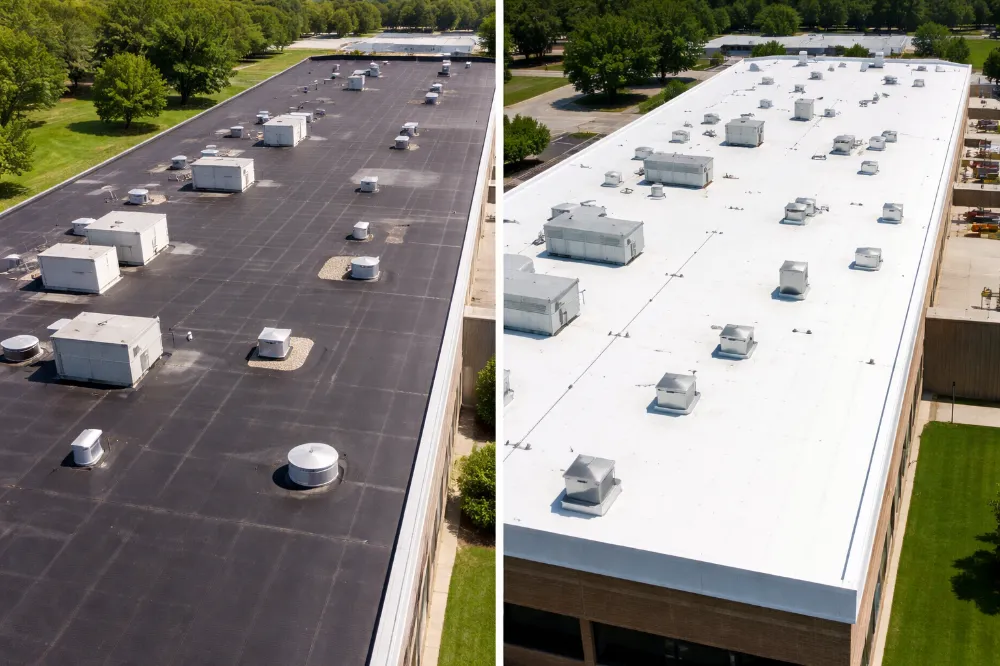
When it comes to choosing the right commercial roofing membrane, two of the most popular options on the market today are EPDM (Ethylene Propylene Diene Monomer) and TPO (Thermoplastic Olefin). Both materials have been widely used on flat and low-slope roofs for decades, but understanding their lifespan differences and what impacts longevity is critical to getting the best return on your roofing investment.
This article breaks down the key differences in expected lifespans between EPDM and TPO roofing systems and offers insights into how real-world conditions, installation quality, maintenance practices, and environmental factors affect how long these roofs really last.
Understanding EPDM and TPO Roof Membranes
Before we dive into lifespan comparisons, it’s helpful to understand what these two roofing materials are and why they’re so common in commercial roofing.
EPDM Roofing:
EPDM is a synthetic rubber membrane made primarily from ethylene and propylene. It has been used in commercial roofing since the 1960s and is valued for its flexibility, resistance to weathering, and long-term durability. According to Wikipedia’s overview of EPDM rubber, the material is known for excellent resistance to ozone, UV radiation, and temperature extremes, which explains its longevity in roofing applications.
TPO Roofing:
TPO is a single-ply thermoplastic membrane designed to combine durability with heat-weldable seams. It is typically white or light-colored to reflect sunlight and reduce heat absorption. TPO gained popularity in the late 1990s and early 2000s as energy efficiency standards became more prominent.
Both systems are designed for flat or nearly flat roofs surfaces where traditional asphalt shingles would fail due to ponding water and inadequate drainage. However, despite similarities in application, each membrane has unique properties that influence how long it lasts.
Typical Lifespan: EPDM vs. TPO
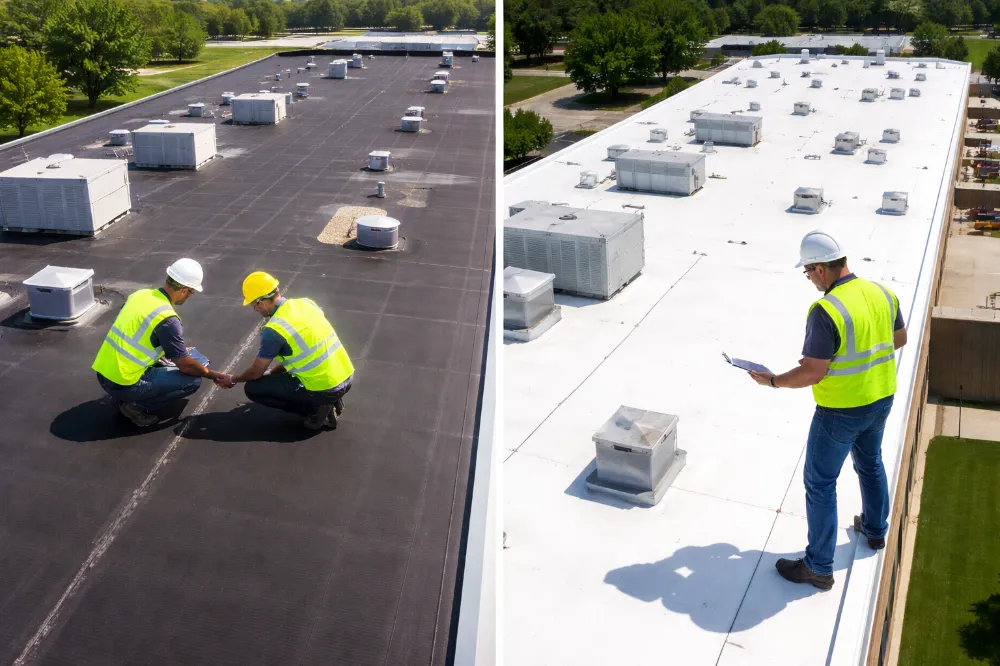
When comparing lifespans, it’s essential to differentiate between manufacturer-rated lifespan and actual, real-world performance.
EPDM Roof Lifespan
Manufacturer Range:
EPDM roofing systems are often rated for 20 to 30+ years, with premium membranes sometimes rated beyond three decades.
Real-World Expectancy:
When installed correctly and maintained properly, EPDM roofs commonly reach 25 to 30 years, and many exceed 35 years in favorable conditions. Its rubber composition resists UV damage and remains flexible over time, reducing cracking and fatigue.
TPO Roof Lifespan
Manufacturer Range:
TPO systems are typically advertised with a 15 to 25-year expected lifespan.
Real-World Expectancy:
Because TPO is newer than EPDM, long-term data is still developing. Many well-installed TPO roofs perform reliably for 15 to 20 years, though lifespan can vary widely depending on membrane quality and installation practices.
How Installation Quality Impacts Roof Lifespan
Installation quality often has a greater impact on roof lifespan than the membrane itself.
EPDM Seams:
EPDM seams are sealed using adhesives or seam tape. When surface preparation and adhesion are done properly, seams can remain watertight for decades. Poor seam bonding is one of the most common causes of premature EPDM failure.
TPO Seams:
TPO seams are heat-welded, creating a fused bond. Proper welding produces strong, long-lasting seams, but inconsistent temperatures, inexperienced installers, or poor quality control can significantly shorten roof life.
Proper flashing around penetrations, drains, and rooftop equipment is critical for both systems. Even the best membrane will fail prematurely if detailing is done incorrectly.
Environmental and Climate Considerations
Climate plays a major role in determining how long a roof will last.
Sun and Heat Exposure:
TPO’s reflective surface reduces roof temperatures and cooling loads, which can benefit buildings in hot climates. The U.S. Department of Energy highlights how reflective roofing systems can improve energy performance in warm regions.
EPDM absorbs heat due to its black surface, but its rubber composition handles thermal expansion and contraction well, allowing it to perform reliably across a wide range of climates.
Cold and Freeze-Thaw Conditions:
EPDM remains flexible in cold temperatures, reducing the risk of cracking. Older TPO formulations sometimes stiffened in cold climates, though modern versions have improved significantly.
Maintenance: A Lifespan Multiplier
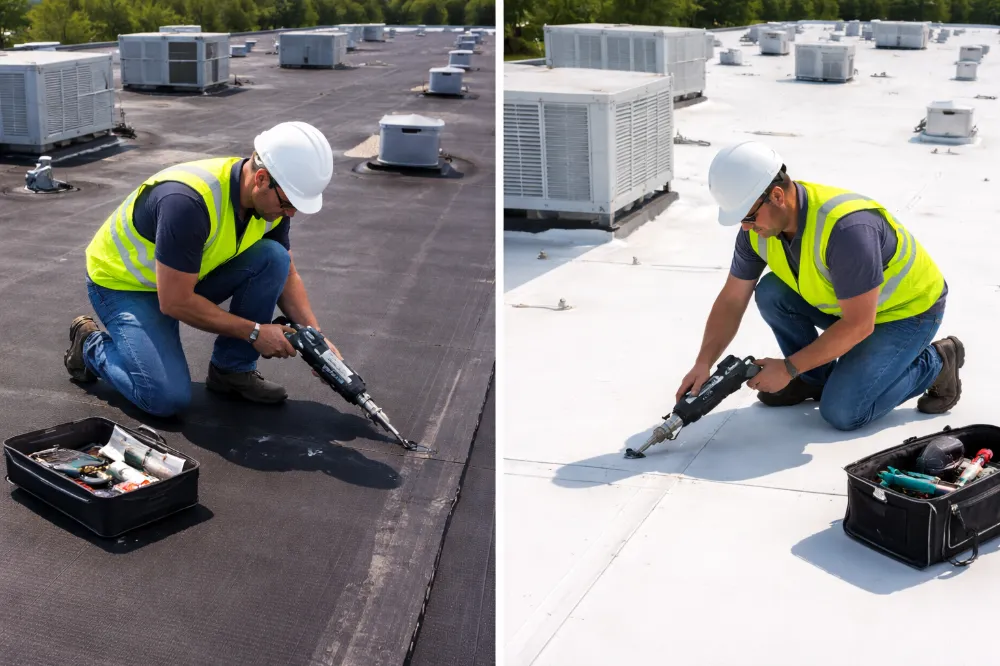
Routine maintenance plays a critical role in extending roof lifespan.
EPDM maintenance typically focuses on inspecting seams, reapplying sealants, and repairing punctures caused by foot traffic or debris. TPO maintenance emphasizes checking weld integrity, flashing details, and membrane stress points. In both cases, scheduled inspections and timely repairs often determine whether a roof reaches its full expected lifespan or fails early.
Cost vs. Lifespan: A Value Comparison
EPDM generally has a lower upfront installation cost and a longer service life, often resulting in a lower cost per year over time. TPO may carry a higher initial cost but can deliver energy savings through reduced cooling expenses, particularly in warm climates.
When evaluating value, building owners should consider installation quality, maintenance needs, energy performance, and long-term durability not just initial price.
Final Thoughts
In an EPDM vs TPO roof lifespan comparison, EPDM typically offers longer proven durability and a stronger historical performance record. TPO continues to improve and provides energy-efficiency benefits, but its long-term success depends heavily on membrane quality and proper installation.
The best roofing choice balances climate, budget, building use, and long-term goals. Understanding how EPDM and TPO perform over time helps ensure a roofing investment that protects your property for decades rather than years.
FAQs
Which roof lasts longer, EPDM or TPO?
EPDM generally lasts longer, often 25–35 years, while TPO typically lasts 15–25 years with proper installation.
Is EPDM more durable than TPO?
Yes, EPDM has a longer track record for durability and resistance to UV exposure and weathering.
Does TPO roofing fail faster than EPDM?
TPO doesn’t necessarily fail faster, but its lifespan is more dependent on membrane quality and installation skill.
Can TPO roofs last more than 20 years?
High-quality TPO roofs installed correctly and well maintained can reach or exceed 20 years.
How does climate affect EPDM vs TPO lifespan?
EPDM performs better in cold and variable climates, while TPO excels in hot climates due to its reflective surface.
Do EPDM roofs require more maintenance than TPO?
No, EPDM maintenance is generally simple and predictable, focusing on seams and sealants.
Are TPO seams stronger than EPDM seams?
TPO heat-welded seams can be very strong, but poor welding can significantly reduce roof lifespan.
Is EPDM outdated compared to TPO?
No, EPDM is a proven, widely used roofing system with decades of performance history.
Which roof is better for long-term cost savings?
EPDM often provides lower long-term cost due to its longer lifespan, while TPO may save energy costs in hot climates.
Can installation quality affect roof lifespan more than material?
Yes, improper installation is one of the leading causes of premature failure for both EPDM and TPO roofs.