
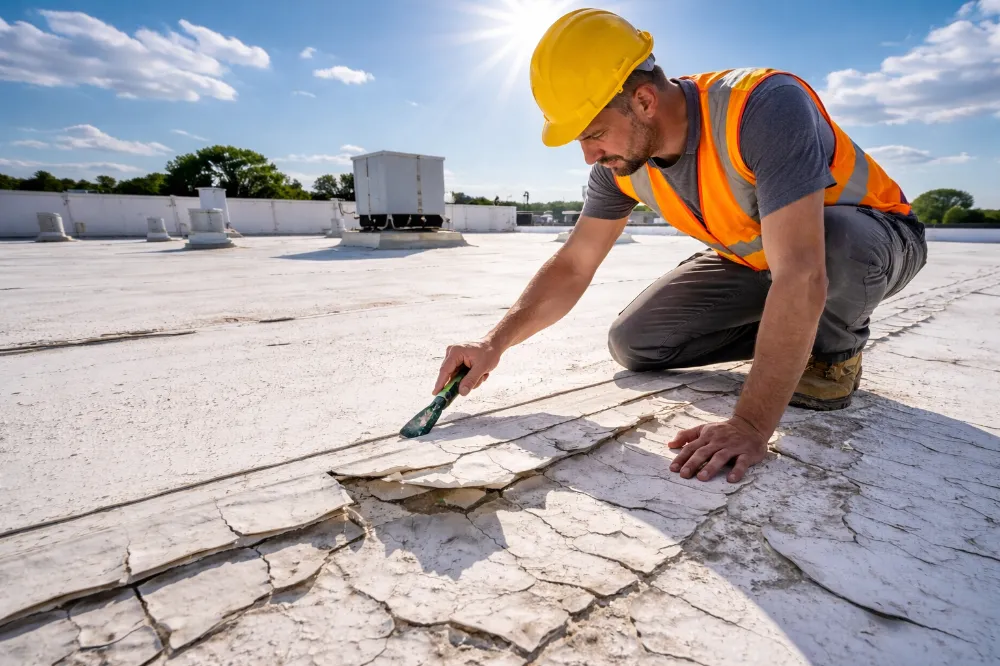
Roofing systems are designed to protect buildings from weather extremes, yet one of the most persistent and underestimated threats to roof longevity is ultraviolet (UV) radiation. Unlike storms or sudden temperature shifts, UV exposure works slowly and continuously, degrading roofing membranes over years of sun exposure. Understanding how UV radiation affects roofing materials is critical for property owners, facility managers, and roofing professionals aiming to maximize roof performance and lifespan.
This article explores the science behind UV degradation, how different roofing membranes respond to UV exposure, warning signs of damage, long-term consequences, and proven strategies to reduce UV-related deterioration.
Understanding UV Radiation and Roofing Materials
Ultraviolet radiation is part of the electromagnetic spectrum emitted by the sun. It carries higher energy than visible light, allowing it to interact directly with the chemical structure of roofing materials. Roofing membranes are largely composed of polymers—long chains of molecules that provide flexibility, strength, and weather resistance.
When UV radiation strikes a roofing membrane, it initiates photochemical reactions that break down these polymer chains. Over time, this process weakens the material, reduces elasticity, and alters the surface chemistry. According to Wikipedia’s overview of ultraviolet radiation, prolonged exposure to UV light can cause polymers to degrade through bond scission and oxidation, leading to brittleness and surface erosion:
Because UV exposure occurs daily and accumulates over time, even high-quality roofing membranes are subject to gradual degradation if not properly protected.
Common Roofing Membranes and Their UV Resistance
Not all roofing membranes respond to UV radiation in the same way. Material composition, additives, color, and surface protection all influence how well a membrane withstands prolonged sun exposure.
Thermoplastic Polyolefin (TPO)
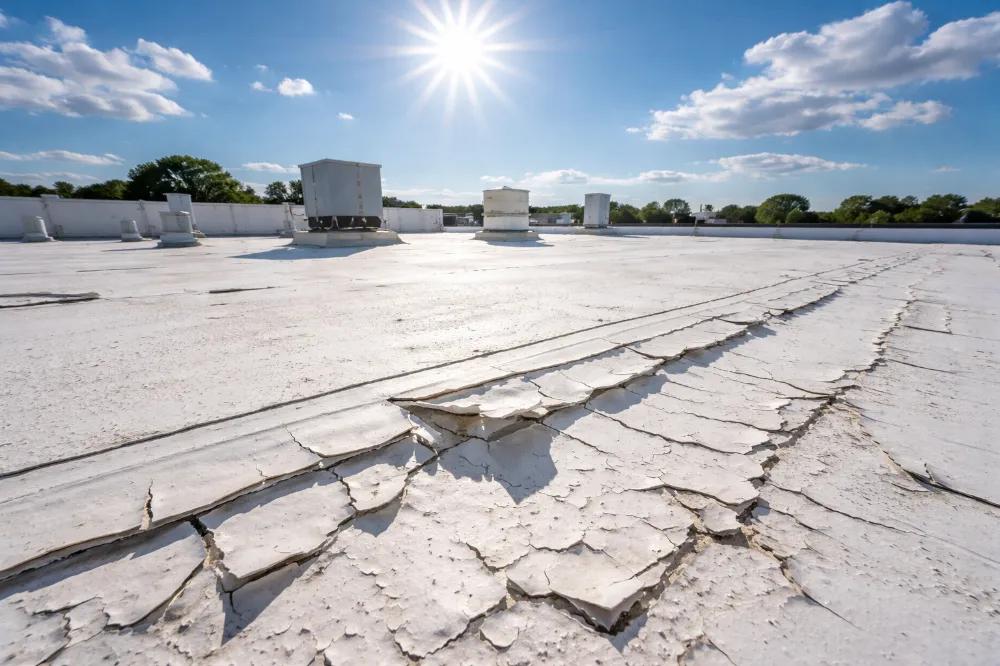
TPO is widely used in commercial roofing due to its reflectivity and energy efficiency. White or light-colored TPO membranes reflect sunlight, reducing heat absorption and limiting UV-related thermal stress. However, early generations of TPO experienced premature UV degradation due to insufficient stabilizers. Modern formulations typically include UV inhibitors, but surface cracking and chalking can still occur over time if protection diminishes.
Ethylene Propylene Diene Monomer (EPDM)
EPDM is a synthetic rubber membrane known for flexibility and weather resistance. Its chemical structure provides inherent resistance to UV radiation, yet its dark surface absorbs significant heat. The combination of UV exposure and thermal cycling accelerates aging, eventually leading to surface oxidation and loss of elasticity.
Polyvinyl Chloride (PVC)
PVC membranes contain plasticizers and UV-resistant additives that improve durability under solar exposure. While PVC generally performs well against UV radiation, long-term exposure can cause plasticizer migration, particularly around seams, leading to embrittlement if maintenance is neglected.
Modified Bitumen Roofing
Modified bitumen membranes rely heavily on surface protection. Granules or reflective coatings shield the asphalt-based layers from direct UV radiation. If this protective layer wears away, UV exposure rapidly dries out the bitumen, increasing cracking and brittleness.
Built-Up Roofing (BUR)
BUR systems use multiple layers of asphalt and reinforcement fabrics, typically protected by gravel or coatings. The effectiveness of UV protection depends on how well the surfacing material is maintained. Loss of gravel or coating exposes the asphalt layers, accelerating UV-driven oxidation.
How UV Exposure Damages Roofing Membranes
UV degradation affects roofing membranes through several interconnected mechanisms:
Polymer Chain Breakdown
UV photons break molecular bonds within polymer chains, shortening them and reducing material strength. This process weakens tensile properties and compromises flexibility, especially at the membrane surface.
Oxidation
UV exposure accelerates oxidation by enabling oxygen to react with roofing materials. Oxidation causes membranes to dry out and lose resilience, often resulting in a chalky or faded appearance.
Loss of Elasticity
As polymer chains degrade, membranes lose their ability to stretch and recover. This is especially problematic during temperature fluctuations, when roofs expand during heat and contract during cooling.
Thermal Amplification
Although UV radiation itself is not heat, surfaces exposed to sunlight can become extremely hot. According to the U.S. Department of Energy, roofing surfaces exposed to intense sunlight can exceed ambient air temperatures by 50°F or more, increasing thermal stress and accelerating material degradation.
The combined effects of heat and UV exposure significantly shorten membrane service life.
Visible Signs of UV Damage
Early detection of UV-related damage allows for corrective action before major failures occur.
Common warning signs include:
• Surface fading or discoloration
• Chalky residue on the membrane surface
• Cracking or splitting, particularly near seams
• Brittle or dry texture when touched
• Granule loss on modified bitumen or BUR systems
• Blistering or delamination in layered systems
These symptoms indicate that the membrane’s protective properties are deteriorating and intervention may be required.
Long-Term Consequences of UV Degradation
Unchecked UV damage leads to more than surface-level issues.
Shortened Roof Lifespan
Roofing membranes are rated for specific service lives based on controlled exposure conditions. Excessive UV degradation can significantly reduce expected lifespan, resulting in premature replacement.
Increased Maintenance and Repair Costs
Cracks and surface breakdown allow moisture infiltration, which can damage insulation, decking, and interior finishes. What starts as UV degradation often escalates into costly structural repairs.
Reduced Energy Efficiency
As reflective surfaces degrade, roofs absorb more heat. This increases indoor cooling loads and energy consumption, particularly in warm climates.
Higher Risk of System Failure
Brittle membranes are more susceptible to punctures during routine maintenance or foot traffic, increasing the likelihood of leaks and emergency repairs.
Strategies to Reduce UV Damage
While UV exposure cannot be eliminated, its impact can be significantly reduced with proactive planning.
Select UV-Stabilized Materials
Modern membranes often include UV inhibitors that absorb or dissipate harmful radiation. Choosing products designed for high UV environments improves long-term performance.
Apply Reflective Roof Coatings
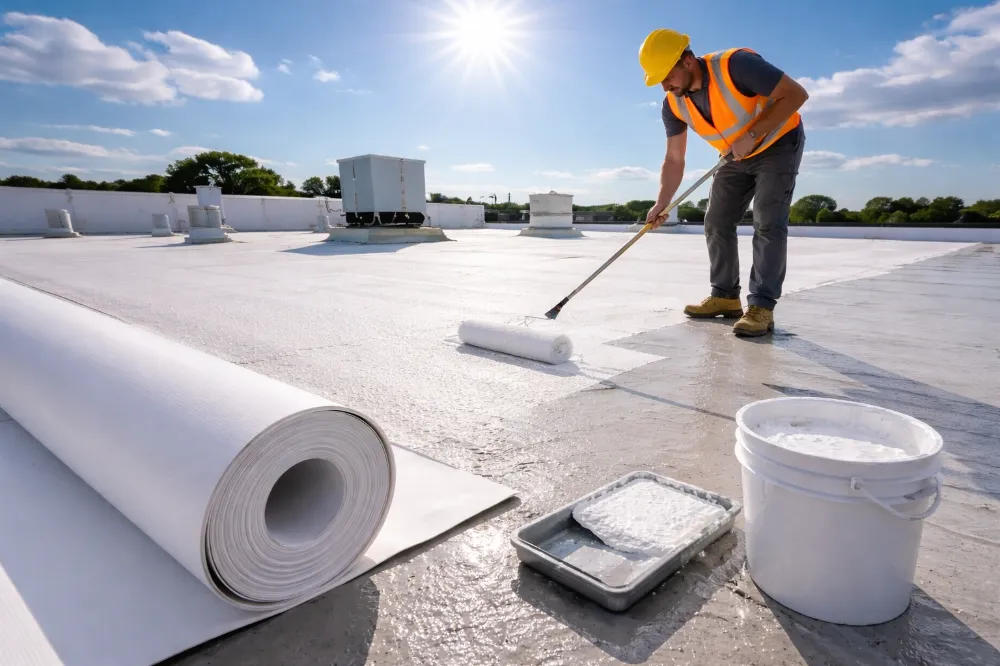
Reflective coatings reduce surface temperature and limit UV absorption. These coatings can extend membrane life while improving energy efficiency.
Maintain Protective Surfacing
For asphalt-based systems, preserving granule coverage or coatings is essential. Prompt repairs to worn areas prevent accelerated UV exposure.
Implement Regular Inspections
Scheduled inspections help identify early UV damage before it becomes severe. Roofs in high-sun regions benefit from more frequent evaluations.
Recoat When Necessary
Periodic recoating restores reflectivity and UV resistance, delaying the need for full replacement.
Environmental Factors That Influence UV Impact
UV intensity varies by location and environmental conditions.
• Lower latitudes receive stronger UV radiation
• Higher elevations experience increased UV exposure
• Regions with minimal cloud cover face greater cumulative exposure
• Reflective nearby surfaces can amplify UV impact
Understanding these factors helps tailor roofing strategies to specific environments.
Making Informed Roofing Decisions
Managing UV exposure begins at the design and material-selection stage. Balancing upfront cost with long-term durability is critical.
Key considerations include material UV ratings, reflectivity values, maintenance requirements, and lifecycle cost. In many cases, investing in UV-resistant membranes and coatings delivers better long-term value than choosing lower-cost systems with limited protection.
Conclusion
UV exposure is one of the most influential forces affecting roofing membrane performance. Through polymer degradation, oxidation, and thermal amplification, prolonged sun exposure gradually weakens roofing systems, leading to reduced lifespan, higher energy costs, and increased repair needs.
By understanding how UV radiation affects different membrane types and implementing proven protective strategies such as reflective coatings, routine inspections, and material selection property owners can significantly slow degradation and extend roof service life. In roofing, longevity is rarely accidental. It’s the result of informed choices, proactive maintenance, and respect for the powerful, persistent effects of the sun.
FAQs
How does UV exposure damage roofing membranes?
UV radiation breaks down polymer chains, causing roofing membranes to lose flexibility, strength, and surface protection over time.
Which roofing membrane is most resistant to UV exposure?
PVC and modern TPO membranes typically offer strong UV resistance due to added stabilizers and reflective surfaces.
Can UV damage cause roof leaks?
Yes, UV degradation leads to cracking and brittleness, which can allow moisture to penetrate the roofing system.
Does roof color affect UV damage?
Lighter-colored and reflective roofs reduce heat and UV absorption, slowing membrane deterioration.
How long does UV exposure take to damage a roof membrane?
Damage occurs gradually over years, but signs can appear sooner in high-sun or high-temperature regions.
Are roof coatings effective against UV radiation?
Yes, reflective and elastomeric coatings significantly reduce UV exposure and surface temperatures.
Can UV damage be repaired or reversed?
While material breakdown can’t be reversed, coatings and localized repairs can slow further deterioration.
Does UV exposure affect roof energy efficiency?
Yes, degraded membranes absorb more heat, increasing cooling costs and reducing energy efficiency.
How often should roofs be inspected for UV damage?
At least twice a year, and more frequently in regions with intense sunlight or high temperatures.
Is UV damage covered under roofing warranties?
Coverage varies; some warranties exclude damage caused by prolonged UV exposure without proper maintenance.