
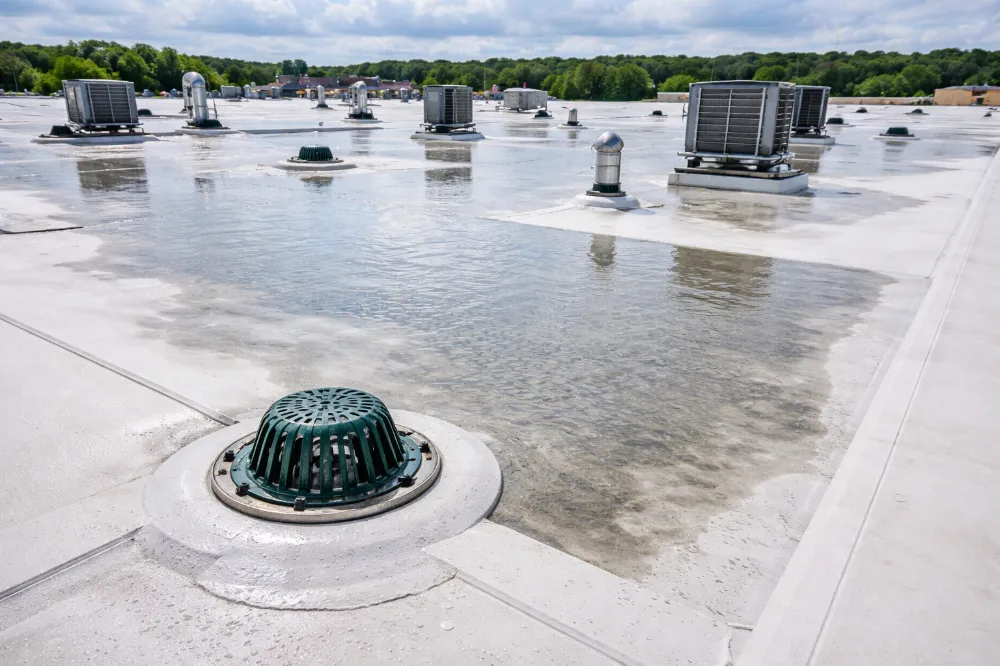
When it comes to commercial roofing systems, effective drainage design is one of the most critical elements that can determine long-term performance and durability. Unlike residential roofs, commercial roofs often cover expansive surface areas, are commonly flat or low-slope, and must manage significant volumes of water during heavy rainfall. Without proper drainage, water accumulation can lead to structural stress, membrane deterioration, insulation damage, increased maintenance costs, and premature roof failure. Understanding commercial roof drainage design considerations is essential for architects, building owners, facility managers, and roofing professionals responsible for protecting large-scale structures.
This article explores the fundamental principles of commercial roof drainage design, system components, sizing and placement strategies, code compliance, and long-term performance considerations.
The Importance of Proper Commercial Roof Drainage
Commercial roof drainage exists for one primary purpose: to move water off the roof surface efficiently and safely. Standing water increases load stress and accelerates roof system degradation. According to building science research summarized by the U.S. General Services Administration, water is one of the most common causes of building envelope failure when not properly managed.
Inadequate drainage can lead to:
- Ponding water that exceeds structural load limits
- Premature membrane breakdown and seam failure
- Saturated insulation and reduced thermal performance
- Interior leaks affecting operations and tenant spaces
- Increased liability and maintenance expenses
Commercial roof drainage design is therefore a life-cycle investment, not just a construction detail.
Understanding Roof Slope and Positive Drainage
Although many commercial roofs are referred to as “flat,” they are designed with subtle slopes to promote positive drainage. A roof that appears flat still requires engineered slope to prevent water from stagnating.
Most standards recommend a minimum slope of 1/8 inch per foot, while 1/4 inch per foot is preferred in areas prone to heavy rainfall. Tapered insulation systems are commonly used to achieve this slope without altering building height or structural framing.
Positive drainage reduces reliance on large drainage components and minimizes the risk of long-term ponding, which is defined in the roofing industry as water remaining on the roof surface more than 48 hours after rainfall.
Types of Commercial Roof Drainage Systems
Commercial buildings use several drainage strategies depending on roof configuration, climate, and building design.
Internal roof drains
These drains collect water at low points and direct it through interior piping systems. Internal drains are popular for large roofs because they protect piping from freezing and maintain a clean exterior appearance.
Scuppers
Scuppers allow water to exit through the parapet wall into external downspouts or splash blocks. They are often used as secondary drainage devices or where internal drainage is impractical.
Gutters and downspouts
Perimeter drainage systems collect water at roof edges. While effective, they require careful sizing and maintenance to prevent overflow and ice buildup.
Emergency overflow drainage
Secondary drainage systems are required by most building codes to protect the structure if primary drains become blocked. These systems prevent excessive water accumulation that could lead to roof collapse.
Drain Sizing and Rainfall Calculations
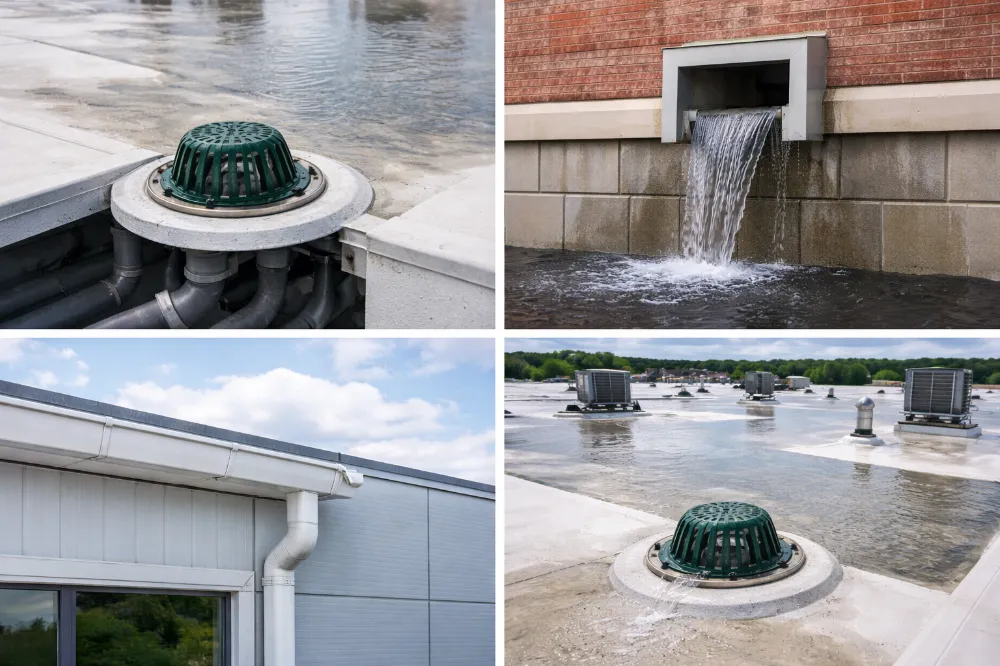
Proper drain sizing begins with calculating the expected water volume during peak rainfall events. Designers rely on historical rainfall intensity data specific to the building’s geographic location. These calculations ensure the drainage system can handle extreme weather conditions without backing up.
The American Society of Civil Engineers establishes rainfall design criteria widely used in commercial construction, while plumbing and building codes specify minimum drain capacities. Failure to size drains appropriately can result in system overload even during moderate storms.
A commonly referenced guideline is providing one primary drain per 2,500 square feet of roof area, but actual requirements vary based on rainfall intensity and roof geometry.
Drain Placement and Roof Geometry
Drain placement is just as important as drain size. Roof drains must be located at true low points to ensure water flows naturally toward them. On large roofs, multiple drainage zones may be required to reduce water travel distance and prevent localized ponding.
Roof geometry, including parapet walls, expansion joints, and rooftop equipment, influences water movement. Designers often incorporate crickets and saddles raised, sloped sections to divert water around obstacles and toward drains.
Poor placement can negate even the best drainage hardware, leading to recurring water issues.
Flashing, Membrane Integration, and Waterproofing
Roof drains represent intentional penetrations through the roofing system and must be detailed carefully. Drain assemblies typically include a drain body, clamping ring, and strainer. The roofing membrane is sealed to the drain body to create a watertight connection.
Improper flashing or loose clamping rings are common sources of leaks. Drain details must follow manufacturer specifications to maintain warranty coverage and long-term performance.
Debris Control and Maintenance Accessibility
Even a well-designed drainage system will fail without proper maintenance. Leaves, gravel, roofing debris, and trash can clog drains and scuppers, restricting flow.
Drain strainers and baskets are essential to block large debris while allowing water to pass. These components must remain accessible for routine cleaning. Roof designs that bury drains under equipment or place them in hard-to-reach locations significantly increase long-term risk. A successful commercial roof drainage design always accounts for ongoing maintenance, not just initial installation.
Secondary Drainage and Code Compliance
Most U.S. building codes require secondary drainage systems on commercial roofs. These systems provide a backup water path if primary drains are blocked.
Secondary drains must be:
- Sized equal to or larger than primary drains
- Located at a higher elevation to activate during backup conditions
- Routed independently to prevent shared blockages
Failure to include secondary drainage can result in non-compliance, structural hazards, and increased liability for building owners and design professionals.
Rooftop Equipment and Drainage Interference
Commercial roofs often host HVAC units, exhaust fans, solar panels, and access structures. Each of these can interfere with water flow if not properly planned.
Drainage design must account for:
- Equipment placement relative to drains
- Clearance for maintenance access
- Added load from ponding behind curbs or supports
Crickets, tapered insulation, and careful layout planning help ensure water continues to flow freely around rooftop installations.
Retrofitting and Drainage Upgrades
When commercial roofs are repaired or replaced, drainage must be reevaluated. Changes in insulation thickness, roof slope, or equipment placement can alter water flow patterns.
Retrofit projects often reveal undersized drains or outdated systems that no longer meet modern code requirements. Addressing drainage deficiencies during roof replacement is far more cost-effective than dealing with water damage after installation.
Long-Term Performance and Monitoring

Commercial roof drainage performance should be monitored throughout the roof’s lifespan. Regular inspections after heavy rain can identify slow drainage, ponding areas, or debris buildup. Establishing a proactive maintenance plan helps extend roof service life, protect warranties, and reduce unexpected repair costs.
Conclusion
Commercial roof drainage design considerations go far beyond placing drains and hoping for the best. Effective drainage protects the roof system, preserves structural integrity, reduces long-term costs, and safeguards building occupants and assets.
By carefully evaluating slope, drain type, placement, sizing, maintenance access, and code compliance, building owners and professionals can ensure their commercial roofing systems perform reliably for decades. Proper drainage is not optional it is one of the most important investments in the longevity and safety of any commercial building.
FAQs
Why is drainage critical for commercial roofs?
Poor drainage causes ponding water, which can damage membranes, increase structural loads, and shorten roof lifespan.
What is considered ponding water on a commercial roof?
Ponding water is water that remains on the roof surface for more than 48 hours after rainfall.
How much slope should a commercial roof have for proper drainage?
Most standards recommend a minimum of 1/8 inch per foot, with 1/4 inch per foot preferred when possible.
What are primary and secondary roof drains?
Primary drains handle normal water flow, while secondary drains provide overflow protection if primary drains clog.
Are emergency drains required on commercial buildings?
Yes, most building codes require secondary drainage systems to prevent roof collapse during blockages.
How are commercial roof drains sized?
Drain sizing is based on roof area, rainfall intensity, and local building code requirements.
What role does tapered insulation play in drainage design?
Tapered insulation creates slope on flat roofs to direct water toward drains and prevent ponding.
Can rooftop equipment affect roof drainage?
Yes, HVAC units and other equipment can block water flow if not properly planned and diverted.
How often should commercial roof drains be inspected?
Drains should be inspected at least twice per year and after major storm events.
What happens if a commercial roof has inadequate drainage?
Inadequate drainage can lead to leaks, structural damage, mold growth, and costly repairs.