
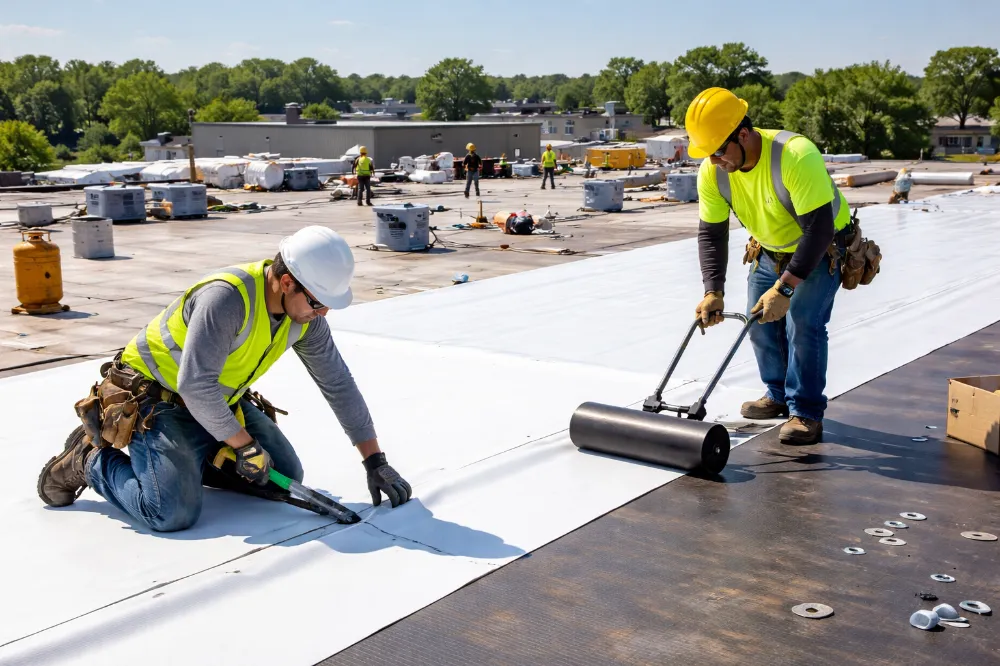
Flat roof installation is a practical and increasingly popular solution for both residential and commercial buildings. With a clean architectural profile, lower material usage, and easier access for maintenance, flat roofs offer real advantages when designed and installed correctly. However, success depends on thoughtful planning, the right material selection, and a clear understanding of drainage, insulation, and long-term performance.
This guide breaks down flat roof installation from start to finish, covering materials, preparation, installation steps, cost influences, and maintenance considerations that protect the roof over its full lifespan.
Understanding Flat Roof Systems
Although they appear level, flat roofs are built with a slight pitch to move water toward drainage points. Local building code requirements for roof slope typically mandate a minimum of ¼ inch per foot to prevent standing water and structural stress. This subtle slope is one of the most critical design elements in flat roofing and directly affects durability. According to guidance summarized by the U.S. Department of Energy on roof assemblies and performance, proper slope and moisture control are essential to preventing long-term structural and insulation damage.
Flat roofs are commonly used on:
- Commercial buildings
- Modern residential homes
- Garages and additions
- Multifamily properties
When properly installed, they can provide decades of service while supporting mechanical systems, solar panels, or rooftop amenities.
Benefits and Limitations of Flat Roofs
Flat roofs are chosen for their efficiency and versatility, but they come with responsibilities.
Benefits include:
- Lower upfront construction costs
- Easier access for inspections and repairs
- Efficient use of rooftop space
- Compatibility with energy-efficient systems
Limitations include:
- Increased exposure to water accumulation
- Greater reliance on proper drainage design
- Higher sensitivity to installation quality
Ignoring commercial roof drainage design considerations during planning is one of the most common reasons flat roofs experience early problems.
Common Flat Roof Materials Explained
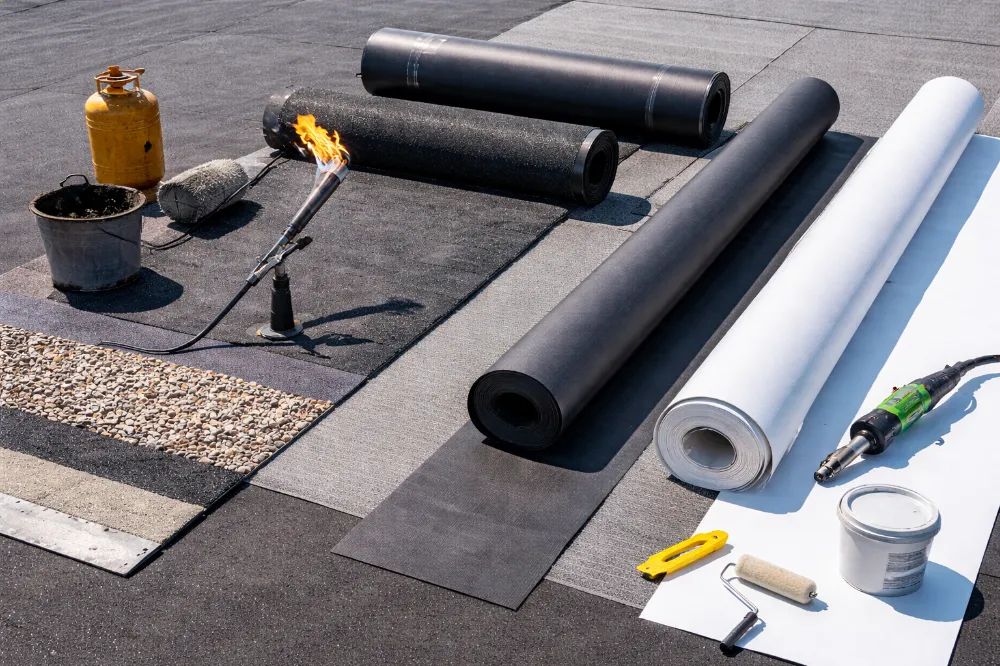
Selecting the right roofing material is essential to managing durability, energy performance, and maintenance costs.
Built-Up Roofing (BUR)
A traditional system using multiple layers of asphalt and reinforcement fabric. It offers excellent waterproofing but adds weight and labor.
Modified Bitumen
An evolution of BUR that provides improved flexibility and durability. It is ideal for buildings exposed to temperature swings.
EPDM Roofing
A rubber membrane known for long service life. Many property owners consider an EPDM vs TPO roof lifespan comparison when choosing between single-ply options, as EPDM often excels in durability while TPO offers reflectivity.
TPO Roofing
A reflective membrane that helps reduce heat absorption and cooling costs, especially in warmer climates.
PVC Roofing
Offers strong resistance to chemicals, grease, and fire, making it popular for restaurants and industrial buildings.
Spray Polyurethane Foam (SPF)
Provides seamless coverage and insulation but requires ongoing coating maintenance. Additional technical background on these systems can be found in Wikipedia’s overview of flat roof construction and materials, which outlines how different membranes perform under varying conditions .
Pre-Installation Planning and Assessment
Every successful flat roof installation begins with evaluation and planning.
Structural Review
The building must support not only the roofing materials but also water load, insulation, and equipment. Structural limitations often influence material choice and thickness.
Insulation Strategy
Roof insulation R-value requirements by climate zone play a major role in energy efficiency and code compliance. Higher R-values are often required in colder climates to prevent heat loss and condensation.
Drainage Design
Effective drainage protects the membrane and underlying structure. Improper drainage is a leading cause of leaks and deterioration.
Step-by-Step Flat Roof Installation Process
1. Roof Removal and Deck Preparation
Old materials are removed, and the deck is inspected for damage. Any compromised sections are repaired before proceeding.
2. Creating Proper Slope
Tapered insulation systems are installed to ensure water flows toward drains or scuppers, reducing the risk of ponding.
3. Insulation Installation
Rigid insulation boards are mechanically fastened or adhered. Proper placement reduces thermal bridging and improves efficiency.
4. Vapor Barriers and Underlayments
These layers protect against moisture migration and improve membrane adhesion.
5. Membrane Installation
Single-ply systems are rolled out and secured, while multi-ply systems are layered and sealed. Precision during this phase determines long-term performance.
6. Flashing and Penetrations
The best flashing methods for roof penetrations involve reinforced membranes, metal flashings, and proper sealants. Poor flashing is a primary leak source in flat roofing systems.
7. Drainage Integration
Drains, scuppers, and gutters are installed and sealed to ensure efficient water removal.
8. Final Inspection
Seams, edges, and penetrations are inspected before project completion.
Common Installation Challenges
Flat roofs demand attention to detail. Even small mistakes can create large problems.
Ponding Water
Signs of ponding water on low slope roofs include standing water lasting more than 48 hours, discoloration, and membrane deterioration. Persistent ponding accelerates aging and increases leak risk.
Seam Failures
Poorly welded or adhered seams allow moisture infiltration, particularly in single-ply systems.
Thermal Expansion
Temperature changes cause materials to expand and contract. Allowing for movement during installation prevents premature damage.
Code Compliance
Ignoring slope, insulation, or drainage standards can lead to failed inspections and costly rework.
Cost Factors in Flat Roof Installation
Pricing varies based on multiple variables. Cost factors affecting single-ply roofing systems include membrane thickness, insulation depth, roof access, and local labor rates.
Additional influences include:
- Removal of existing roofing
- Number of penetrations
- Structural repairs
- Drainage complexity
While budget matters, choosing the lowest bid often leads to higher long-term costs.
Maintenance and Long-Term Performance
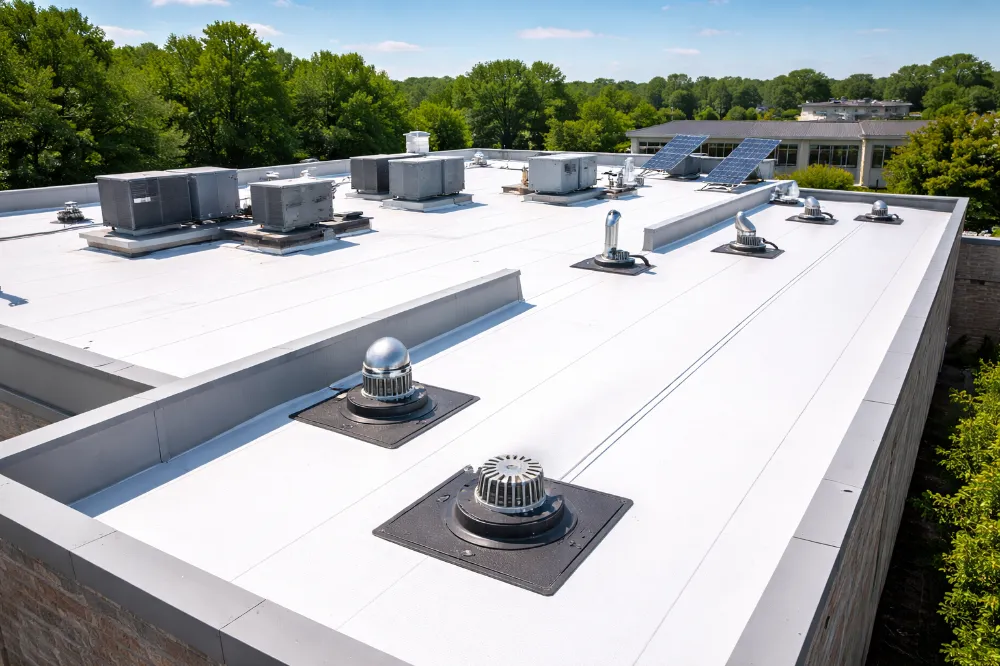
Flat roofs require proactive care.
Understanding how often to inspect a commercial roof is critical. Most professionals recommend inspections at least twice per year and after major storms.
Maintenance best practices include:
- Clearing drains and scuppers
- Checking seams and flashings
- Monitoring surface wear
- Addressing minor issues promptly
The effects of UV exposure on roofing membranes can cause cracking, brittleness, and surface degradation over time, especially without protective coatings.
Preventing Premature Roof Failure
Many roofing issues stem from avoidable mistakes. Common causes of premature roof failure include poor drainage design, inadequate insulation, low-quality materials, and improper installation techniques.
Choosing experienced contractors, quality materials, and a structured maintenance plan dramatically improves roof lifespan.
Choosing the Right Roofing Contractor
The installer is just as important as the material.
Look for contractors who:
- Specialize in flat roofing systems
- Understand drainage and insulation requirements
- Provide clear warranties
- Offer transparent pricing
Experienced professionals anticipate challenges and design solutions that protect the roof over decades, not just years.
Final Thoughts
Flat roof installation is not simply about applying a membrane it is a system that integrates structure, insulation, drainage, and craftsmanship. When designed with care and installed correctly, flat roofs deliver reliable protection, energy efficiency, and long-term value.
By understanding materials, planning requirements, drainage strategies, and maintenance responsibilities, property owners can make confident decisions that extend roof life and reduce unexpected costs. A well-installed flat roof is not just a surface it’s a critical investment in the durability and performance of the entire building.
FAQs
How long does a flat roof installation usually take?
Most flat roof installations take between 2 to 5 days, depending on roof size, material, and weather conditions.
What is the average lifespan of a flat roof?
A properly installed and maintained flat roof can last 15–30 years, depending on the material used.
Do flat roofs really need a slope?
Yes. Flat roofs require a slight slope to ensure proper drainage and prevent standing water.
Which flat roofing material is best for hot climates?
Reflective membranes like TPO or PVC perform well in hot climates by reducing heat absorption.
Are flat roofs more prone to leaks than pitched roofs?
Not if installed correctly. Most leaks occur due to poor drainage, flashing issues, or lack of maintenance.
Can a flat roof support solar panels or HVAC units?
Yes. Flat roofs are ideal for supporting rooftop equipment when properly designed and reinforced.
How often should a flat roof be inspected?
Flat roofs should be inspected at least twice a year and after major storms.
Is insulation required for flat roof installation?
Yes. Insulation is essential for energy efficiency, moisture control, and meeting building codes.
Can a flat roof be installed over an existing roof?
In some cases, yes—but a professional inspection is needed to confirm structural suitability.
What causes most flat roof failures?
Poor drainage design, improper installation, inadequate flashing, and neglected maintenance are the most common causes.